
Hiring a Private Investigator
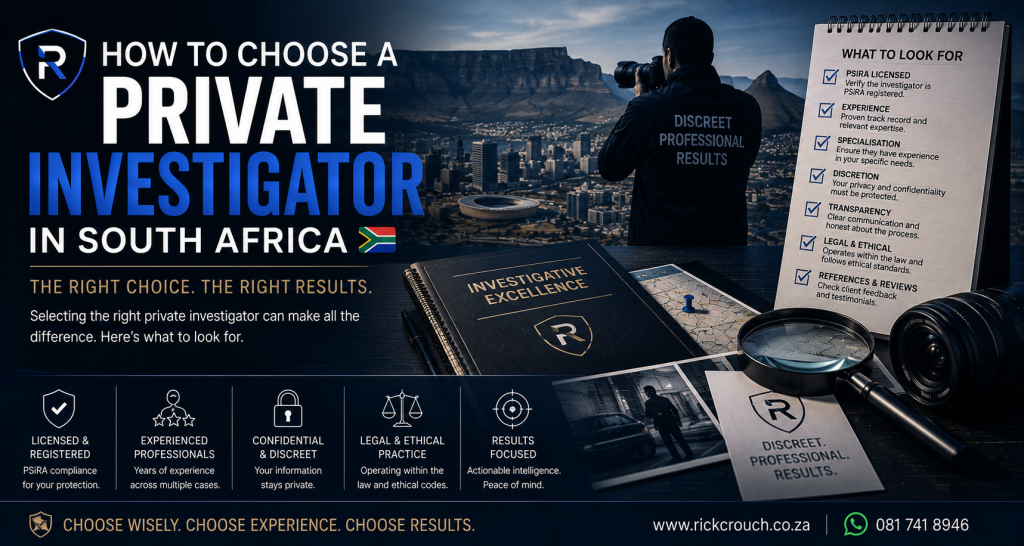
How to Choose a Private Investigator in South Africa
Hiring a private investigator is often a decision made during difficult circumstances. Whether you are dealing with fraud, employee misconduct, a missing person, digital evidence or litigation, choosing the right investigator can significantly influence the outcome of your matter.
Not all investigators have the same qualifications, experience or areas of expertise. Before appointing an investigator, it is important to understand what to look for and what questions to ask.
Why Experience Matters
An experienced investigator brings more than technical skills—they bring judgment developed through years of handling complex matters.
When evaluating an investigator, consider:
- Years of investigative experience
- Types of investigations undertaken
- Court experience
- Professional reporting standards
- Knowledge of South African law
- Experience working with attorneys and businesses
- Digital investigation capabilities
A broad range of experience often allows investigators to adapt to changing circumstances during an investigation.
Verify Licensing and Professional Standing
Before engaging any investigator, confirm that they are appropriately licensed and operate lawfully.
You should also determine:
- Whether they operate an established investigation agency
- Their professional background
- Their areas of expertise
- Their reputation within the industry
Professional investigators should be transparent about their qualifications and services.
Choose an Investigator with Relevant Expertise
Different investigations require different skills.
For example:
Private Investigations
- Surveillance
- Missing Persons
- Witness Location
- Background Investigations
Corporate Investigations
- Employee Theft
- Fraud
- Due Diligence
- Workplace Misconduct
Digital Forensics
- Mobile Phones
- Computers
- Cloud Evidence
- Deleted Data
Cyber Investigations
- Social Media
- Online Fraud
- Email Analysis
- Cryptocurrency Investigations
Selecting an investigator with direct experience in your type of matter is essential.
Ask About Reporting
The final investigation report is often one of the most valuable outcomes of an investigation.
Professional reports should:
- Present factual findings
- Clearly distinguish evidence from opinion
- Include supporting documentation where appropriate
- Be professionally written
- Be suitable for discussion with legal advisers
A well-prepared report helps clients understand the findings and supports informed decision-making.
Understand Confidentiality
Confidentiality is fundamental to every professional investigation.
Ask how your information will be:
- Stored
- Protected
- Shared
- Retained
Professional investigators should explain how client information is handled and the circumstances in which information may be disclosed.
Ask About Digital Capabilities
Many modern investigations involve digital evidence.
Consider whether the investigator has experience with:
- Mobile Phone Forensics
- Computer Forensics
- Email Evidence
- Social Media Investigations
- Open Source Intelligence (OSINT)
- Cyber Investigations
Digital evidence frequently plays an important role in both civil and criminal matters.
Questions to Ask Before Hiring a Private Investigator
Before making your decision, consider asking:
- How long have you been conducting investigations?
- Have you handled similar matters before?
- What information should I provide?
- Will I receive a written report?
- How will you keep me updated?
These questions help establish expectations and ensure effective communication.
Understanding Investigation Costs
The cost of an investigation depends on several factors, including:
- Complexity of the matter
- Geographic location
- Duration of the investigation
- Number of investigators required
- Specialist services such as digital forensics
- Travel requirements
- Reporting requirements
A reputable investigator should explain the anticipated costs before commencing work.
Red Flags to Watch For
Be cautious if an investigator:
- Guarantees a particular outcome
- Promises to obtain information unlawfully
- Cannot provide clear information about their services
- Makes unrealistic promises about time-frames
- Is unwilling to provide written agreements or reports
Professional investigations are based on evidence, not guarantees.
The Importance of Communication
A professional investigator should keep you informed throughout the investigation.
You should know:
- What stage the investigation has reached
- Whether additional information is required
- Expected time-frames
- Significant developments
- When the final report will be available
Clear communication helps build confidence and ensures expectations remain aligned.
Choosing the Right Investigator
When selecting a private investigator, look for professionalism, integrity, experience and clear communication.
The best investigators take the time to understand your objectives, explain the investigative process and provide objective findings supported by evidence.
Choosing carefully at the beginning can save time, reduce costs and improve the overall effectiveness of the investigation.
Need Professional Investigative Assistance?
Rick Crouch & Associates provides professional private investigations, digital forensic examinations, cyber investigations and corporate investigations throughout South Africa.
Contact us for a confidential consultation to discuss your matter and determine the most appropriate investigative approach.
Call 081 741 8946
Email info@rickcrouch.co.za
Related Articles
- What Does a Private Investigator Do?
- How Much Does a Private Investigator Cost in South Africa?
- What to Expect During an Investigation
- Understanding Surveillance Investigations
- Background Investigations Explained
- Digital Forensics: A Beginner’s Guide
- Preserving Digital Evidence
- Fraud Investigation Process